Mitsuharu Misawa
 (0 users)
 Thumb

Image Source: Unknown report
Data Complete 70%
Born
1962-06-18
 Yūbari, Hokkaido, Japan
Died
Unknown Date
Position
Wrestler
Status
Deceased
Ethnicity
Asian
Team Number
Height
1.85 m (6 ft 1 in)
Weight
118 kg (260 lb)
Outfitter
Kit
Wage Year
Player Cartoon
Full Body Render
Sport
 Fighting
Team
_Deceased Fighting
2nd Team
League
_No League
Creative Commons Artwork
No

Mitsuharu Misawa (三沢 光晴 Misawa Mitsuharu, June 18, 1962 – June 13, 2009) was a Japanese professional wrestler.
Misawa made his professional debut on August 21, 1981 for All Japan Pro Wrestling (AJPW). After an excursion to EMLL in 1984, Misawa returned to AJPW as the second Tiger Mask, and wrestled under this gimmick for the rest of the decade. After unmasking in May 1990, Misawa was thrust into a main-event feud with company ace Jumbo Tsuruta, and this expanded into a long-term conflict between factions led by the two. As Tsuruta receded from his main-event position for health reasons, Misawa was definitively established as AJPW's new ace when he won the Triple Crown Heavyweight Championship in August 1992, and held it for the longest reign in the title's history. Misawa remained one of the company's biggest stars throughout the 1990s, and following the death of president and booker Giant Baba in 1999, Misawa inherited his position. However, conflicts over company direction with widow and majority owner Motoko Baba led to his removal from the presidential position by executive board vote in May 2000. After this, Misawa resigned from the board alongside several others, and led a mass exodus of the promotion's talent to form Pro Wrestling Noah (Noah).
Misawa wrestled a full-time schedule throughout his life, and by the late 2000s he was working through various back and shoulder injuries, as well as bone spurs in his neck and visual impairment in his right eye. On June 13, 2009, during a tag match in Hiroshima with Go Shiozaki against Akitoshi Saito and Bison Smith, Misawa died after a belly-to-back suplex from Saito. While the official cause of his death was never released (due to a Japanese law, invoked by his family, that allowed them to keep this information private), the police report speculated that this maneuver caused a cervical injury (the separation of his C1 and C2 vertebrae) that sent Misawa into cardiac arrest.
Misawa was an eight-time world champion in Japanese promotions, having won the Triple Crown Heavyweight Championship five times and the GHC Heavyweight Championship three times; additionally, he was the inaugural holder of the latter championship. Alongside Toshiaki Kawada, Kenta Kobashi, and Akira Taue, Misawa was considered one of AJPW's Four Pillars of Heaven (named after the Four Heavenly Kings), whose matches amongst themselves and others in the promotion received significant critical acclaim throughout the 1990s and became popular with tape-traders in the American pro-wrestling fandom for their high quality. He was named Wrestler of the Year by the Wrestling Observer Newsletter on three occasions (1995, 1997 and 1999), holds the record for most WON five star matches, with 24, and is also one of only six wrestlers to have the distinction of being awarded a six-star rating, for a match with Kawada in 1994. Misawa is widely regarded as one of the greatest professional wrestlers of all time.

 Icons
Icons Table
TableTrophies

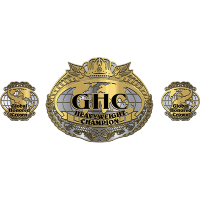 GHC Heavyweight Champion  2006 2006 | GHC Heavyweight Champion 2002 | GHC Heavyweight Champion 2001 |

Milestones
Youth Teams
Senior Teams
Club Staff
Contracts
Player Poster

Banner

News Reports
None found...
Collections
None found...
Statistics
None Found...
Other Links