


EuroLeague Basketball

Other Basketball Leagues
 EuroLeague Basketball
 FIBA Basketball World Cup
 FIBA EuroBasket
 NBA
NBA Olympics Basketball
 Spanish Liga ACB
2025 Season



Missing season text
2024-2025 Season
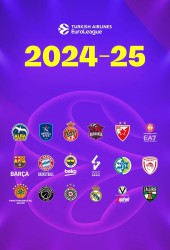
The 2024–25 Turkish Airlines EuroLeague was the 25th season of the modern era of the EuroLeague, and the 15th under the title sponsorship of Turkish Airlines. Including the competition's previous incarnation as the FIBA Europe Champions Cup, this is the 68th season of the premier basketball competition for European men's clubs. The season began on 3 October 2024 and ended on 25 May 2025 with the Final Four. The Final Four was hosted by Etihad Arena in Abu Dhabi, the capital of the United Arab Emirates, which marks the first time in European basketball history that the game is played outside of the continent in 21 years, after the 2004 Final Four in Tel Aviv, Israel.
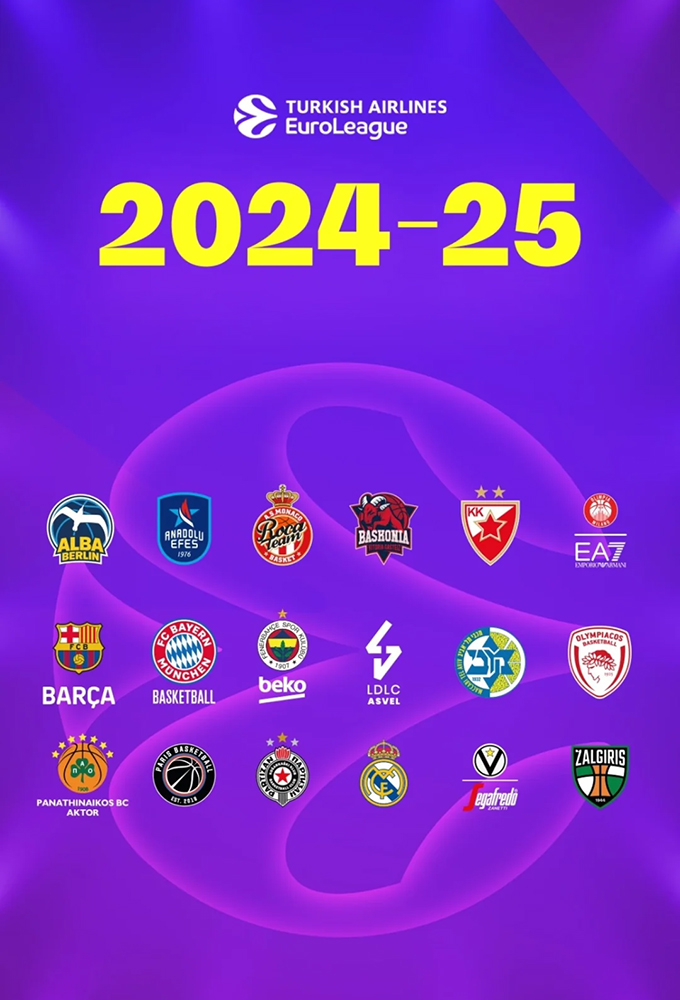
For the fourth straight season, CSKA Moscow had their EuroLeague license rescinded following the Russian invasion of Ukraine. Additionally, for the second consecutive season due to the war in Gaza, Maccabi Tel Aviv played abroad during the season, principally at Aleksandar Nikolic Hall in Belgrade; the majority of games were played behind closed doors.
This will be the second straight season under the new format with the play-in tournament for seventh- to tenth-placed teams in the regular season.
Panathinaikos are the defending champions, but were eliminated in the semi-finals by Fenerbahçe in the semifinal. Fenerbahçe went on to win its first title in 8 years, after beating first-time finalists Monaco in the championship game.
2023-2024 Season
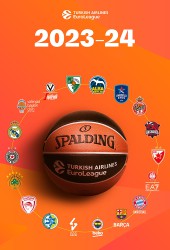
The 2023–24 Turkish Airlines EuroLeague was the 24th season of the modern era of the EuroLeague, and the 14th under the title sponsorship of Turkish Airlines. Including the competition's previous incarnation as the FIBA Europe Champions Cup, this was the 67th season of the premier basketball competition for European men's clubs.
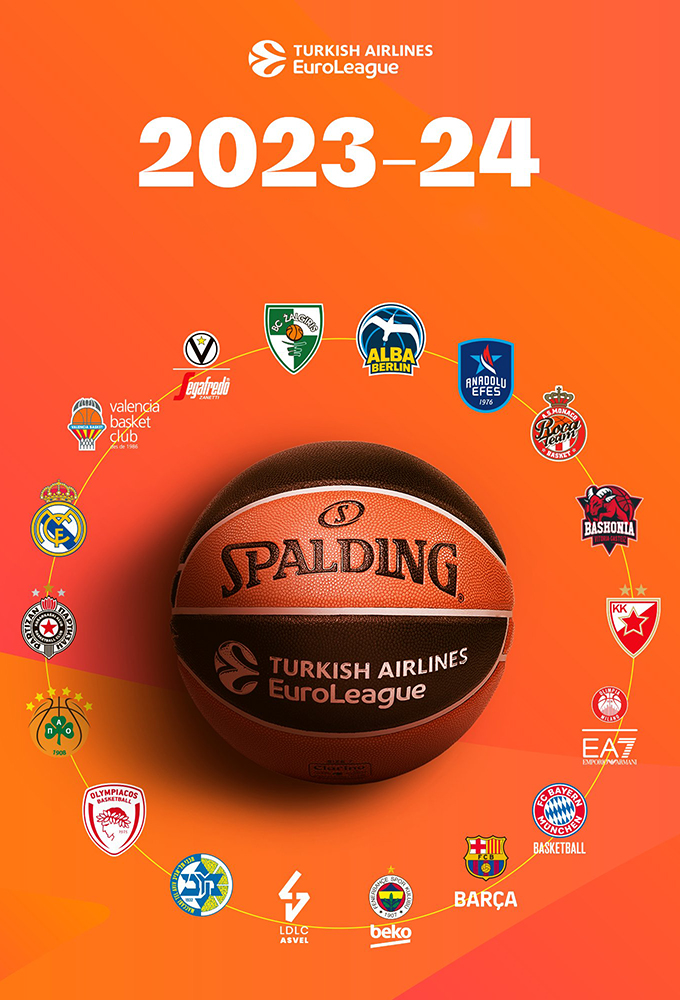
For the third straight season, CSKA Moscow had their EuroLeague license rescinded following the Russian invasion of Ukraine. Additionally, due to the war in Gaza, Maccabi Tel Aviv played abroad during most of the season, principally at Aleksandar Nikolic Hall in Belgrade; all games were behind closed doors.
This season introduced the play-ins, which makes the seventh to tenth-placed teams compete for their playoff spots.
2022-2023 Season
The 2022–23 Turkish Airlines EuroLeague was the 23rd season of the modern era of the EuroLeague, and the 13th under the title sponsorship of Turkish Airlines. Including the competition's previous incarnation as the FIBA Europe Champions Cup, it was the 66th season of the premier basketball competition for European men's clubs.
For a second straight season, CSKA Moscow had their EuroLeague license rescinded for the season following the Russian invasion of Ukraine.
Real Madrid returned to the final after losing to Anadolu Efes the previous year to claim a record-extending eleventh title against Olympiacos at the Žalgirio Arena in Kaunas, ending a five-year drought since their last triumph in 2018. Madrid's Sergio Llull scored the winning shot with 3.1 seconds left on the clock in the championship game. Anadolu Efes were the defending champions, having won two straight titles, but were eliminated after finishing eleventh in the regular season.
2021-2022 Season
The 2021–22 Turkish Airlines EuroLeague was the 22nd season of the modern era of the EuroLeague, and the 12th under the title sponsorship of the Turkish Airlines. Including the competition's previous incarnation as the FIBA Europe Champions Cup, this was the 65th season of the premier basketball competition for European men's clubs. The season started on 30 September 2021. The three Russian teams were suspended because of the 2022 Russian invasion of Ukraine. As the Russian invasion of Ukraine did not cease, the records of all regular season matches against Russian teams were annulled, and team win-loss records adjusted accordingly, dramatically affecting league standings.
Anadolu Efes successfully defended last year's title after defeating Real Madrid in the championship game.
2020-2021 Season
The 2020–21 EuroLeague was the 21st season of the modern era of the EuroLeague and the 11th under the title sponsorship of Turkish Airlines. Including the competition's previous incarnation as the FIBA Europe Champions Cup, this was the 64th season of the premier basketball competition for European men's clubs. The season started 1 October 2020.
As the season was the first to be played after the previous season was abandoned due to travel restrictions caused by the COVID-19 pandemic, the EuroLeague board ruled that the 18 teams from the previous season would stay in the league. Anadolu Efes won the championship after defeating Barcelona in the championship game.
2019-2020 Season
The 2019–20 Turkish Airlines EuroLeague was the 20th season of the modern era of the EuroLeague and the 10th under the title sponsorship of the Turkish Airlines. Including the competition's previous incarnation as the FIBA Europe Champions Cup, this was the 63rd season of the premier basketball competition for European men's clubs. The season started on 3 October 2019 and played its last games on 6 March 2020 due to the COVID-19 pandemic.
On 12 March 2020, Euroleague Basketball temporarily suspended its competitions due to the COVID-19 pandemic. On 25 May, Euroleague Basketball cancelled its competitions due to the COVID-19 pandemic.
The Final Four would have been played in 22–24 May 2020 at the Lanxess Arena in Cologne, Germany. CSKA Moscow was the defending champion and as a consequence of the COVID-19 pandemic, Euroleague Basketball decided not to recognize any team as the champion for the season. The Lanxess Arena was compensated by hosting the next Final Four.
2018-2019 Season
The 2018–19 Turkish Airlines EuroLeague was the 19th season of the modern era of Euroleague Basketball and the eighth under the title sponsorship of the Turkish Airlines. Including the competition's previous incarnation as the FIBA Europe Champions Cup, this was the 62nd season of the premier competition for European men's clubs.
The season started on 11 October 2018 and finished in May 2019 with the 2019 EuroLeague Final Four at Fernando Buesa Arena in Vitoria-Gasteiz, Spain. CSKA Moscow won the championship after defeating Anadolu Efes in the championship game.
2017-2018 Season
The 2017–18 Turkish Airlines EuroLeague was the 18th season of the modern era of Euroleague Basketball and the eighth under the title sponsorship of the Turkish Airlines. Including the competition's previous incarnation as the FIBA Europe Champions Cup, this was the 61st season of the premier competition for European men's professional basketball clubs.
The 2018 EuroLeague Final Four was played at the Štark Arena, in Belgrade, Serbia. Real Madrid won its record tenth EuroLeague title, after defeating defending champions Fenerbahçe Doğuş in the championship game.
2016-2017 Season
The 2016–17 Turkish Airlines EuroLeague was the 17th season of the modern era of Euroleague Basketball and the seventh under the title sponsorship of the Turkish Airlines. Including the competition's previous incarnation as the FIBA Europe Champions Cup, this was the 60th season of the premier level competition for European men's professional basketball clubs.
This was the first season in which the competition changed to a league format, with sixteen teams playing each other in a home-and-away round-robin competition. Regular season groups were abolished, as well as the Top 16 group stage.
The Final Four was hosted by the Sinan Erdem Dome in Istanbul, Turkey. Fenerbahçe won its inaugural European championship in its home city after defeating Olympiacos in the final.
2015-2016 Season
The 2015–16 Turkish Airlines Euroleague was the 16th season of the modern era of Euroleague Basketball and the sixth under the title sponsorship of the Turkish Airlines. Including the competition's previous incarnation as the FIBA Europe Champions Cup, this was the 59th season of the premier competition for European men's professional basketball clubs.
The 2016 Euroleague Final was played between CSKA Moscow and Fenerbahçe at the Mercedes-Benz Arena in Berlin, Germany. CSKA Moscow defeated Fenerbahçe 101–96 on extra time in the final to win their seventh European Cup/Euroleague title. Real Madrid were the title holders, but they were eliminated by Fenerbahçe in the playoffs.
2014-2015 Season
The 2014–15 Turkish Airlines Euroleague was the 15th season of the modern era of EuroLeague basketball and the fifth under the title sponsorship of the Turkish Airlines. Including the competition's previous iteration as the FIBA Europe Champions Cup, this was the 58th season of the premier competition for European men's clubs.The city of Madrid hosted the Final Four from May 15 to 17, 2015.
2013-2014 Season
The 2013–14 Turkish Airlines Euroleague was the 14th season of the modern era of Euroleague Basketball and the fourth under the title sponsorship of the Turkish Airlines. Including the competition's previous incarnation as the FIBA Europe Champions Cup, this was the 57th season of the premier competition for European men's clubs.Euroleague Basketball Company, in its annual meeting in Barcelona, determined the site of the season's Euroleague Final Four venue. London was originally supposed to host the Final Four, but it was decided that the 2014 Euroleague Final Four be held at the Mediolanum Forum, in Milan. In the championship final game, Maccabi Electra Tel Aviv defeated the previous season's runners-up, Real Madrid, by a score of 98-86 after overtime, and won its sixth Euroleague title in the club's history.
2012-2013 Season
The 2012–13 Euroleague was the 13th season of the modern era of Euroleague Basketball and the third under the title sponsorship of the Turkish Airlines. Including the competition's previous incarnation as the FIBA Europe Champions Cup, this was the 56th season of the premier competition for European men's clubs. The season started on 11 October 2012 and finished on 12 May 2013.The Final Four was held at The O2 Arena in London. The championship game was won by Olympiacos, who defeated Real Madrid 100–88. Olympiacos became the third team since the introduction of the Final Four format to win two Euroleague championships in a row and the second team in Euroleague Basketball Company era (2000–01 Euroleague season to present) to become back-to-back Euroleague champions.
2011-2012 Season
The 2011–12 Turkish Airlines Euroleague was the 12th season of the modern era of Euroleague and the second under the title sponsorship of Turkish Airlines. Including the competition's previous incarnation as the FIBA Europe Champions Cup, this was the 55th season of the premier competition for European men's clubs. The Final Four was held at the Sinan Erdem Dome in Istanbul, in 11–13 May 2012. It was won by the Piraeus club Olympiacos (2nd title), who defeated CSKA Moscow in the championship game. It was the 5th final involving a Greek club in the last six seasons, and 4th Greek win in that time.2010-2011 Season
The 2010–11 Turkish Airlines Euroleague was the 11th season of the modern era of professional Euroleague Basketball, and the first under the title sponsorship of Turkish Airlines. Including the competition's previous incarnation as the FIBA Europe Champions Cup, this was the 54th season of the premier first-tier competition for European men's clubs.The format featured 24 teams, beginning with Game 1 of the first qualifying round on September 21, 2010, and culminating at the Final Four in the Palau Sant Jordi, Barcelona. It was won by the Athenian club Panathinaikos (6th title), who defeated Maccabi Electra in the championship game of May 8, 2011. Montepaschi Siena, finished 3rd by holding off Real Madrid in the third-place game.
At the individual level, the season was marked by Dimitris Diamantidis of Panathinaikos. Not only did the Greek point guard lift the trophy for the third time in five years and receive the Euroleague Final Four MVP award, but he also became the first player ever to win three end-of-season awards: Euroleague MVP, Euroleague Best Defender, and All-Euroleague First Team.
2009-2010 Season
The 2009–10 Euroleague was the 10th season of the Euroleague, a professional basketball competition for elite clubs throughout Europe organised by Euroleague Basketball Company, and it was the 53rd season of the premier competition for European men's clubs overall. The regular season featured 24 teams from 13 countries.This season marked the first time since 2001–02 season that a qualifying round was used to determine the last two teams for the regular season. The qualifying round started on September 29, 2009, while the regular season of the Euroleague started on October 15, 2010. The season ended with the Euroleague Final Four, which was hosted at the Palais Omnisports de Paris-Bercy in Paris, France, with the final on May 9, 2010.
2008-2009 Season
The 2008–09 Euroleague was the 9th season of the professional basketball competition for elite clubs throughout Europe, organised by Euroleague Basketball Company, and it was the 52nd season of the premier competition for European men's clubs overall. The season, which featured 24 teams from 13 countries, culminated in the 2008–09 Euroleague Final Four at the new O2 World arena in Berlin, Germany. It was won by Panathinaikos, who defeated in the final, the defending champions, CSKA Moscow.While the general structure of the competition was identical to that used in recent seasons, changes were made to the format for two of its phases, the Regular Season and Quarterfinals.
2007-2008 Season
The 2007–08 Euroleague was the 8th season of the professional basketball competition for elite clubs throughout Europe, organised by Euroleague Basketball Company, and it was the 51st season of the premier competition for European men's clubs overall. The 2007–08 season featured 24 competing teams. The Euroleague Regular Season draw was held on 30 June 2007, in Jesolo, Italy, during the inaugural Euroleague summer league. The official inauguration was held on October 22, at Hala Olivia in Gdańsk, Poland, before the season's opening game between Prokom Trefl Sopot and CSKA Moscow. The 2008 Final Four was held on May 2–4, 2008, at the Palacio de Deportes de la Comunidad de Madrid in Madrid, Spain. Russian power CSKA Moscow became the champion for the sixth time, placing them second in all-time European championships to Real Madrid.2006-2007 Season
The 2006–07 Euroleague was the 7th season of the professional basketball competition for elite clubs throughout Europe, organised by Euroleague Basketball Company, and it was the 50th season of the premier competition for European men's clubs overall. The season featured 24 competing teams from 13 countries.The competition began on October 24, 2006, at the Olympic Pavilion in Badalona, Spain, with Panathinaikos winning 82-79 against DKV Joventut. The final of the competition was held on May 6, 2007, in the Olympic Indoor Hall in Athens, Greece, the home court of Panathinaikos, with Panathinaikos defeating the defending champions, CSKA Moscow, by a score of 93-91.
2005-2006 Season
The 2005–06 Euroleague was the 6th season of the professional basketball competition for elite clubs throughout Europe, organised by Euroleague Basketball Company, and it was the 49th season of the premier competition for European men's clubs overall.The 2005–06 season featured 24 competing teams from 13 countries. The Final Four was held at the Sazka Arena in Prague, Czech Republic on April 30, 2006. CSKA Moscow defeat the defending champions, Maccabi Elite by a score of 73–69 in the final.
2004-2005 Season
The 2004–05 Euroleague was the fifth season of the professional basketball competition for elite clubs throughout Europe, organised by Euroleague Basketball Company, and it was the 48th season of the premier competition for European men's clubs overall. The 2004–05 season featured 24 competing teams, from 13 countries. The final of the competition was held in Olimpiisky Arena, Moscow, Russia, with the defending champions, Maccabi Tel Aviv, defeating Tau Cerámica by a score of 90-78.2003-2004 Season
The 2003–04 Euroleague was the fourth season of the professional basketball competition for elite clubs throughout Europe, organised by Euroleague Basketball Company, and it was the 47th season of the premier competition for European men's clubs overall. The 2003–04 season featured 24 competing teams from 13 countries. The final of the competition was held in Nokia Arena, Tel Aviv, Israel, with hosts Maccabi Elite Tel Aviv, defeating Skipper Bologna, by a score of 118-74.2002-2003 Season
The 2002–03 Euroleague was the third season of the professional basketball competition for elite clubs throughout Europe, organised by Euroleague Basketball Company, and it was the 46th season of the premier competition for European men's clubs overall. The 2002–03 season featured 24 competing teams from 13 countries without qualifying rounds as FIBA organised its own top tier competition and many teams competed in the 2002–03 FIBA Europe Champions Cup. The final of the competition was held in Palau Sant Jordi, Barcelona, Spain, with hosts FC Barcelona defeating Benetton Treviso 76-65.2001-2002 Season
The 2001–02 Euroleague was the second season of the professional basketball competition for elite clubs throughout Europe, organised by Euroleague Basketball Company, and it was the 45th season of the premier competition for European men's clubs overall. The season started on October 10, 2001, and ended on May 5, 2002.The Final Four was hosted in the PalaMalaguti in Bologna, Italy. A number of 32 teams competed for the championship, which was won by Panathinaikos. Mirsad Türkcan was named Regular season MVP, while Dejan Bodiroga was awarded EuroLeague Top 16 MVP and EuroLeague Final Four MVP.
2000-2001 Season
The 2000–01 FIBA SuproLeague was FIBA Europe's professional club basketball tournament for the 2000–01 season. Up until that season, there was one cup, the FIBA European Champions' Cup (which is now called the EuroLeague), though in this season of 2000–01, the leading European teams split into two competitions: the FIBA SuproLeague and Euroleague Basketball Company's Euroleague 2000–01.The season started on 18 October 2000, and ended on 13 May 2001. The competition's Final Four took place at Palais Omnisports de Paris-Bercy, in Paris, France. The 2000–01 SuproLeague was the last European top tier club competition organised by FIBA.
1999-2000 Season
The 1999–2000 FIBA EuroLeague was the 43rd installment of the European top-tier level professional club competition for basketball clubs (now called simply EuroLeague). It began on September 23, 1999, and ended on April 20, 2000. The competition's Final Four was held at PAOK Sports Arena, Thessaloniki, with Panathinaikos defeating Maccabi Elite Tel Aviv in the EuroLeague Final, in front of 8,500 spectators.Efes Pilsen finished in the third position, and FC Barcelona finished fourth.
1998-1999 Season
The 1998–99 FIBA EuroLeague was the 42nd installment of the European top-tier level professional club competition for basketball clubs (now called simply EuroLeague). It began on September 23, 1998, and ended on April 22, 1999. The competition's Final Four was held at Olympiahalle, Munich, with Žalgiris defeating Kinder Bologna in the EuroLeague Final, in front of 9,000 spectators.1997-1998 Season
The 1997–98 FIBA EuroLeague was the 41st installment of the European top-tier level professional club competition for basketball clubs (now called simply EuroLeague). It began on September 18, 1997, and ended on April 23, 1998. The competition's Final Four was held at Palau Sant Jordi, Barcelona, with Kinder Bologna defeating AEK in the EuroLeague Final, in front of 11,900 spectators.Benetton Treviso finished in the third position, while Partizan finished fourth.
1996-1997 Season
The 1996–97 FIBA EuroLeague was the 40th installment of the European top-tier level professional club competition for basketball clubs (now called simply EuroLeague). It was organized by FIBA Europe. It began on September 19, 1996, and ended on April 24, 1997. The competition's Final Four was held at Rome.In the previous 5 seasons of the competition, the competition's official name was FIBA European League, or shortened to FIBA EuroLeague. This season was the first edition of the competition that took the shortened name of FIBA EuroLeague, as the league's official name.
1995-1996 Season
The 1995–96 FIBA European League, also shortened to 1995–96 FIBA EuroLeague, was the 39th installment of the European top-tier level professional club competition for basketball clubs (now called EuroLeague). It began on September 7, 1995, and ended on April 11, 1996. Panathinaikos B.C. became the first Greek team to lift the FIBA European League championship after beating FC Barcelona Banca Catalana by one point in the final match of the competition's Final Four, which was held at Paris.The 1995–96 season saw the return of 1991-92 European League champion Partizan on the international scene, after three years ban of Yugoslav clubs due to UN embargo. However, Partizan was eliminated in the qualifying rounds.
It was the last season of the competition that took place under the name of FIBA European League, as the competition was renamed to FIBA EuroLeague, starting with the next season.
1994-1995 Season
The 1994–95 FIBA European League, also shortened to 1994–95 FIBA EuroLeague, was the 38th installment of the European top-tier level professional club competition for basketball clubs (now called EuroLeague). It began on September 8, 1994, and ended on April 13, 1995. The competition's Final Four was held at Zaragoza.1993-1994 Season
The 1993–94 FIBA European League, also shortened to 1993–94 FIBA EuroLeague, was the 37th installment of the European top-tier level professional club competition for basketball clubs (now called EuroLeague). It began on September 9, 1993, and ended on April 21, 1994. The competition's Final Four was held at Tel Aviv. The competition was won by 7up Joventut against . Olympiacos by two points in the final match. It has been the club's only Euroleague (European League) title.Limoges CSP, the defending champions, were eliminated in the quarterfinals by Panathinaikos.
Federal Republic of Yugoslavia's entrant was unable to participate for the second season in a row due to the UN economic sanctions. After the 1993 dissolution of Czechoslovakia, Czech Republic and Slovakia each had representative clubs in the competition for the first time.
1992-1993 Season
The 1992–93 FIBA European League, also shortened to 1992–93 FIBA EuroLeague, was the 36th season of the European top-tier level professional club competition for basketball clubs (now called EuroLeague). It featured 42 competing teams from 33 countries. The final of the competition was held on April 15, 1993, at the Peace and Friendship Stadium in Piraeus, Greece, with Limoges CSP defeating Benetton Treviso, by a score of 59–55. The defending title holder, Partizan, was not allowed in the competition because of United Nations Security Council Resolution 757, which imposed sanctions against Yugoslavia.1991-1992 Season
The 1991–92 FIBA European League, also shortened to 1991–92 FIBA EuroLeague, was the 35th installment of the European top-tier level professional club competition for basketball clubs (now called EuroLeague). The competition's Final Four was held at the Abdi İpekçi Arena in Istanbul, Turkey. It was won by Partizan, who defeated Montigalà Joventut, by a result of 71–70.This season of the competition also marked an end to the era of European national domestic league champions only participation, as it featured an expanded competition, that included national domestic league champions, the current league title holders, and some other teams from the most important national domestic leagues. That also was in accordance with the league being renamed, and being called the FIBA European League (or shortened to FIBA EuroLeague) championship for men's clubs. This was because the new competition format was closer to a true European League in style. It was a name the competition would keep for the next four editions of the competition as well.
1990-1991 Season
The 1990–91 FIBA European Champions Cup was the 34th season of the European top-tier level professional FIBA European Champions Cup (now called EuroLeague). It was won by POP 84, after they beat FC Barcelona Banca Catalana 70–65. It was their second championship triumph over the Spanish team, and their third straight championship overall. A feat previously achieved only by Rīgas ASK, who won the first three editions of the trophy. The culminating 1991 FIBA European Champions Cup Final Four was held at Palais Omnisports de Paris-Bercy, Bercy, Paris, on 16–18 April 1991. Toni Kukoč was named Final Four MVP for the second straight year.This season of the competition also marked an end to the era of European national domestic league champions only participation, as the next season featured an expanded competition, that included national domestic league champions, the current league title holders, and some other teams from the most important national domestic leagues. That also was in accordance with the league being renamed for the next season, and being called the FIBA European League (or shortened to FIBA EuroLeague) championship for men's clubs. A name the competition would keep for the next five editions of the competition.
1989-1990 Season
The 1989–90 FIBA European Champions Cup was the 33rd season of the European top-tier level professional FIBA European Champions Cup (now called EuroLeague). It was won by Jugoplastika, after they beat FC Barcelona Banca Catalana 72–67. It was the club's second title overall. The culminating 1990 EuroLeague Final Four was held at Pabellón Príncipe Felipe, Zaragoza, Spain, on 17–19 April 1990. Toni Kukoč was named Final Four MVP.1988-1989 Season
The 1988–89 FIBA European Champions Cup was the 32nd season of the European top-tier level professional FIBA European Champions Cup (now called EuroLeague), which was won by Jugoplastika, after they beat Maccabi Elite Tel Aviv 75-69. The culminating 1989 EuroLeague Final Four was held at Olympiahalle, Munich, West Germany, on 4–6 April 1989. Dino Rađja was named Final Four MVP.1987-1988 Season
The 1987–88 FIBA European Champions Cup season was the 31st season of the FIBA European Champions Cup (now called EuroLeague). It was won by Tracer Milano, after they beat Maccabi Elite Tel Aviv 90-84. It was the first season in the competition's modern era where the Final Four format was used to decide the champion. The 1988 FIBA European Champions Cup Final Four was held at Flanders Expo Pavilion in Ghent, Belgium, on 5–7 April 1988. Bob McAdoo was named Final Four MVP.1986-1987 Season
The 1986–87 FIBA European Champions Cup was the 30th edition of the FIBA European Champions Cup club competition (now called EuroLeague). The Final was held at the Centre Intercommunal de Glace de Malley in Lausanne, Switzerland, on April 2, 1987. It was won by Tracer Milano, who defeated Maccabi Elite Tel Aviv, by a result of 71–69.1985-1986 Season
The 1985–86 FIBA European Champions Cup was the 29th edition of the FIBA European Champions Cup club competition (now called EuroLeague). The Final was held at the Sportcsarnok in Budapest, Hungary, on April 3, 1986. It was won by Cibona for the second time in a row. They defeated Žalgiris in the finals, by a result of 94–82.1984-1985 Season
The 1984–85 FIBA European Champions Cup was the 28th season of the FIBA European Champions Cup club competition (now called EuroLeague). It was the first season of the competition that included the 3 point field goal. The Final was held at the Peace and Friendship Stadium in Piraeus, Greece, on April 3, 1985. Cibona won its first title, defeating Spanish side, Real Madrid, by a result of 87–78.1983-1984 Season
The 1983–84 FIBA European Champions Cup was the 27th season of the European Champions Cup club competition (now called EuroLeague). The Final was held at the Patinoire des Vernets in Geneva, Switzerland on March 29, 1984. Banco di Roma won its first title, defeating Spanish side, FC Barcelona, by a result of 79–73.1982-1983 Season
The 1982–83 FIBA European Champions Cup was the 26th season of the European top-tier level professional basketball club competition FIBA European Champions Cup (now called EuroLeague). The Final was held at the Palais des Sports, in Grenoble, France, on March 24, 1983. Ford Cantù won their second title in a row, defeating another Italian club, Billy Milano, by a result of 69–68. In this season, FIBA reintroduced the preliminary knock-out rounds, which were abandoned after the 1975–76 season.1981-1982 Season
The 1981–82 FIBA European Champions Cup was the 25th season of the European top-tier level professional basketball club competition FIBA European Champions Cup (now called EuroLeague). The Final was held at the Sporthalle, in Cologne, West Germany, on March 25, 1982. Squibb Cantù defeated the defending title holders, Maccabi Elite Tel Aviv, by a result of 86–80.1980-1981 Season
The 1980–81 FIBA European Champions Cup was the 24th season of the European top-tier level professional basketball club competition FIBA European Champions Cup (now called EuroLeague). The Final was held at the Hall Rhénus, in Strasbourg, France, on March 26, 1981. In a tightly contested game, Maccabi Elite Tel Aviv defeated Sinudyne Bologna, by a result of 80–79.1979-1980 Season
The 1979–80 FIBA European Champions Cup was the 23rd season of the European top-tier level professional basketball club competition FIBA European Champions Cup (now called EuroLeague). The Final was held at the Deutschlandhalle, in West Berlin, on March 27, 1980. Real Madrid defeated Maccabi Elite Tel Aviv, by a result of 89–85.1978-1979 Season
The 1978–79 FIBA European Champions Cup was the 22nd season of the European top-tier level professional basketball club competition FIBA European Champions Cup (now called EuroLeague). The Final was held at the Palais des Sports, in Grenoble, France, on April 5, 1979. Bosna defeated Emerson Varese, by a result of 96–93. This final was the last in an impressive run of ten consecutive finals appearances for Varese, and is also notable for Bosna's Žarko Varajić scoring 45 points, a still active record for the number of most points scored in a single EuroLeague Finals game.1977-1978 Season
The 1977–78 FIBA European Champions Cup was the 21st season of the European top-tier level professional basketball club competition FIBA European Champions Cup (now called EuroLeague). The Final was held at the Olympiahalle, in Munich, West Germany, on April 6, 1978. Real Madrid defeated Mobilgirgi Varese, by a result of 75–67; both teams qualified for 1978 FIBA Intercontinental Cup.1976-1977 Season
The 1976–77 FIBA European Champions Cup was the 20th edition of the European top-tier level professional basketball club competition FIBA European Champions Cup (now called EuroLeague). The Final was held at the Pionir Hall, in Belgrade, Yugoslavia, on April 7, 1977. Maccabi Elite Tel Aviv defeated Mobilgirgi Varese, by a score of 78–77. This year saw a competition system change, as FIBA opted to replace classic knock-out round qualifications with a group stage.1975-1976 Season
The 1975–76 FIBA European Champions Cup was the 19th edition of the European top-tier level professional basketball club competition FIBA European Champions Cup (now called EuroLeague). The Final was held at the Patinoire des Vernets, in Geneva, Switzerland, on April 1, 1976. In a third consecutive final for these two teams, Mobilgirgi Varese defeated Real Madrid, by a result of 81–74.1974-1975 Season
The 1974–75 FIBA European Champions Cup was the 18th edition of the European top-tier level professional basketball club competition FIBA European Champions Cup (now called EuroLeague). The Final was held at the Arena Deurne, in Antwerp, Belgium, on April 10, 1975. In a reprise of a previous year's final, Ignis Varese defeated Real Madrid, by a result of 79–65.1973-1974 Season
The 1973–74 FIBA European Champions Cup was the 17th edition of the European top-tier level professional basketball club competition FIBA European Champions Cup (now called EuroLeague). The Final was held at the Palais des Sports de Beaulieu, in Nantes, France, on April 3, 1974. It was won by Real Madrid, who defeated Ignis Varese in the finals, by a result of 84–82. This was the 5th consecutive final for Varese, and the first of three consecutive finals played between these two teams.1972-1973 Season
The 1972–73 FIBA European Champions Cup was the 16th installment of the European top-tier level professional basketball club competition FIBA European Champions Cup (now called EuroLeague). The Final was held at the Country Hall du Sart Tilman, in Liège, Belgium, on March 22, 1973. It was won by Ignis Varese for the second time in a row. They defeated CSKA Moscow in the finals, by a result of 71–66.1971-1972 Season
The 1971–72 FIBA European Champions Cup was the 15th installment of the European top-tier level professional basketball club competition FIBA European Champions Cup (now called EuroLeague). The Final was held at the Yad Eliyahu Arena, in Tel Aviv, Israel, on March 23, 1972. It was won by Ignis Varese, who defeated Jugoplastika, by a result of 70–69.1970-1971 Season
The 1970–71 FIBA European Champions Cup was the 14th installment of the European top-tier level professional basketball club competition FIBA European Champions Cup (now called EuroLeague). The Final was held at the Arena Deurne, in Antwerp, Belgium, on April 8, 1971. It was won by CSKA Moscow, who defeated Ignis Varese, by a result of 67–53.1969-1970 Season
The 1969–70 FIBA European Champions Cup was the thirteenth installment of the European top-tier level professional basketball club competition FIBA European Champions Cup (now called EuroLeague). The Final was held at the Sportska Dvorana Skenderija, in Sarajevo, Yugoslavia, on April 4, 1970. It was won by Ignis Varese, who defeated CSKA Moscow, by a result of 79–74.